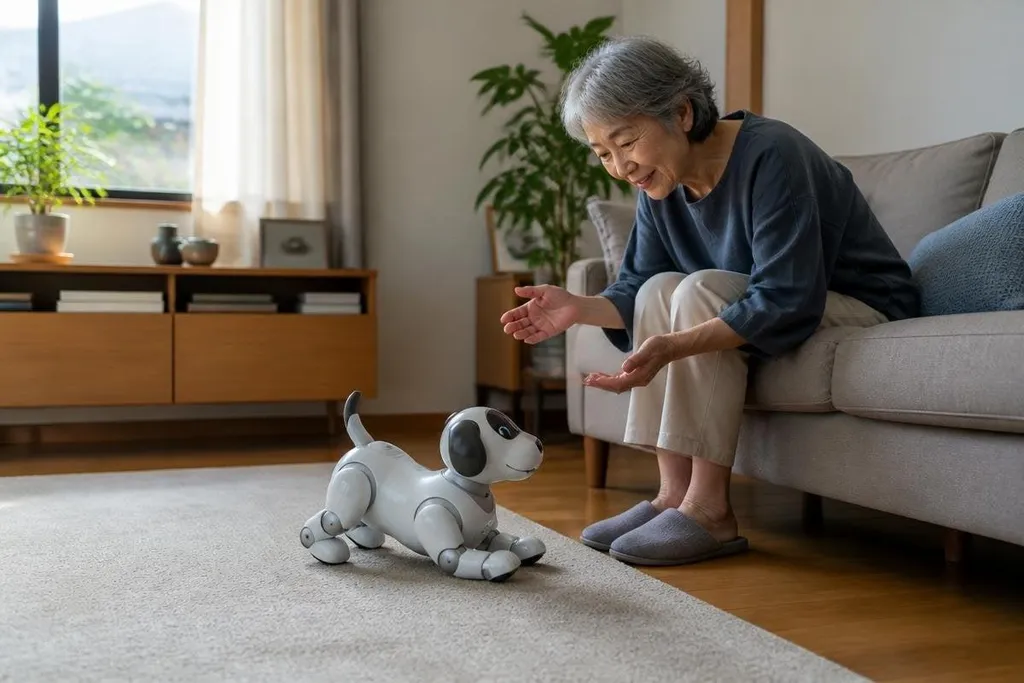
Robot pets are easier to live with than real animals in a few clear ways: they don't need food, walks, or a vet. The harder question is whether more people are buying them, because no sales figures or source pack support that claim here.
What can be explained is why the idea appeals to owners who want company without the full care load.
Quick read
- Robot pets copy parts of animal behavior through motors, sensors, speakers, and software.
- They fit homes where noise, allergies, rental rules, or time make a real pet difficult.
- Their weak point is simple: a programmed response isn't the same as an animal's needs or judgment.
The appeal is easier care
A real dog needs daily exercise, food, cleaning, training, and medical care. A robot pet shifts that work toward charging, software updates, surface cleaning, and occasional repairs. Those tasks still take time, but they are easier to schedule and cost than veterinary treatment.
That difference matters to someone in a small apartment, a rented home, or a household where an animal could trigger allergies. It also suits a person who works long shifts and can't promise care at fixed times. These machines don't remove every duty. They reduce the duty that comes from keeping another living creature healthy.
The trade is clear. A robot pet can react when you touch it, move its head, play a sound, or follow a programmed routine. It can't feel hunger, fear, pain, or affection. Those limits should sit beside every claim about companionship.
Sensors make the interaction feel personal
Most robot pets depend on a small set of parts. Cameras help the robot detect people and objects. Microphones pick up spoken commands or nearby sound. Motors move the body, while speakers and lights give the robot a way to respond.
Software joins those parts into a loop. The robot detects something, selects a response, and moves or makes a sound. A touch sensor may trigger a purr-like noise. A camera may help it turn toward a person. The action can feel personal because it follows something you did, even though the robot is matching inputs to programmed behavior.
This also explains why two owners may rate the same robot very differently. One person may value movement and sound. Another may care more about quiet operation, privacy, or the ability to turn the camera off. The product is shaped as much by the home as by the robot.
A robot pet can draw attention without finding buyers. Robot24.com's robotics coverage can place claims about sensors and autonomy beside sales figures, launch dates, and named companies when those records exist. Without that evidence, more attention says little about market demand.
The missing proof is market demand
The phrase “becoming more popular” needs sales data, shipment totals, search data, or a dated survey. Without one of those, it is safer to describe a reason for interest than to claim a measured trend.
That distinction matters when a product appears often in videos or news reports. Attention can show that people are curious. It doesn't show how many bought a robot, kept it, or used it after the first month.
These products also face limits that a polished demonstration may hide. Batteries need charging. Wheels and joints wear out. Software support can end. A camera or microphone may raise privacy concerns, especially in a bedroom or shared home. Repairs may cost more than the robot seems to justify.
A buyer's checklist
Use these checks before paying for one:
- Set the job: Decide if you want entertainment, a moving display, or daily interaction.
- Check the sensors: Find out whether the robot has a camera, microphone, touch sensor, or none of them.
- Measure the care: Confirm charging needs, cleaning steps, update rules, and repair options.
- Read the privacy terms: Check what data the robot stores and whether you can delete it.
- Test the sound: A speaker that seems pleasant for five minutes may become tiring after a week.
- Plan the exit: Ask how you will reset, resell, recycle, or repair the robot if interest fades.
I'd skip a robot pet if the main need is emotional care, because software can copy a response without carrying a living animal's needs. It makes more sense as a low-care companion object for a home that values movement, sound, and routine but can't keep a real pet.
The next useful measure is not how lifelike the robot looks in a short video. It is how many owners still charge it, interact with it, and keep it after six months.